Conference Diary 2026 – Labour
Our chief policy officer Chris Norris was in Liverpool this week for the Labour Conference. He shares his conference diary outlining key conversations and why we will need to work harder than ever to push back against calls for rent controls.
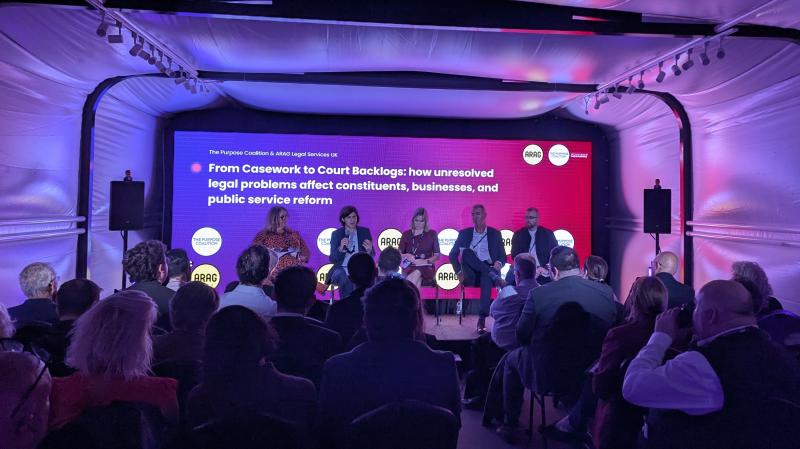
I think I attended by my first Labour Party conference 22 years ago.
It was in Brighton, which in those days was handy because no matter how ‘over tired’ delegates were by the end of a busy day of composite motions, they just had to keep the sea on the correct side to find their way back to their lodgings.
Of course, 2004 was nothing like 2026. In the early 2000s we had a charismatic Labour Prime Minister, the Government had just passed a major piece of housing legislation which was imposing significant new costs on landlords, a young up and coming junior minister called John Healey was at the Treasury, and the conference venue was dogged by protests about western interventions in the middle east.
No parallels at all….

One thing that has changed over the last two decades, is the scale and length of these conferences. Prior to a couple of years ago only the most dedicated party organisers and local delegates arrived much earlier than Sunday night, and most of the business didn’t get underway until Monday morning. That is no longer the case, and Sunday seems to have become an important (and very busy) part of conference. So much so that more and more of us now arrive on Saturday to make sure not to miss anything important.
Day 0 – Saturday
The conference hasn’t officially started, but that doesn’t mean that there isn’t a great deal of activity. Exhibitors are busy setting up stands and local delegates are getting ready for a host of receptions held on the first (unofficial) night. This can be a good time to catch local representatives, organisers, and even the occasional mayor. It’s also a useful opportunity to spot junior ministers and advisors getting the lay of the land ahead of the much more hectic official start of conference.
Day 1 – Sunday
Definitely not a day of rest. Sunday has rapidly become one of the busiest days of conference, with meetings running from 8am until late into the evening.
To give you a little insight, throughout the day I attended meetings discussing how housing policy can help (or hinder) the maintenance of Labour’s internal coalition, the temporary accommodation crisis, the role mayors can play in unlocking capital investment, strategies for taxing income and wealth, and ending homelessness.
Throughout the day there were four significant highlights.
Mid-morning, I attended a meeting with Sarah Sackman MP, the minister for courts and legal services and whilst the meeting was not strictly focussed on housing it was a chance to highlight the delays landlords and tenants are experiencing when it comes to accessing the courts. She countered that her department is working towards “an efficient system that works well”, which is difficult to argue with but still lacking some essential details.
Later in the day in conversation with Think Labour, a centre-left think tank, it was interesting to hear them not fully endorse rent controls as a solution to the affordability crisis – although this was not a view entirely in line with the majority of the delegates at a Labour Housing Group event.
Nevertheless, it was somewhat refreshing to hear a Labour aligned organisation acknowledge that rent controls would likely lead to further issues of under-supply and therefore difficulties in accessing housing.
By the afternoon discussions had turned to tax. Whilst the HMT minister Lucy Rigby extolled the virtues of including rent payments in credit scores – the real meat of the debate for me was talk around CGT and how gains could be ‘fairly’ taxed. Dame Wendy Carlin of the Stone Centre at UCL provided a fascinating rundown of how she would reform the taxation of income and wealth, a great deal of which was surprisingly in line with some of our own thinking here at the NRLA.
The day wrapped up with a reception jointly hosted by Shelter and Crisis, where rumour had it, we may have expected a visit by a certain former mayor of Greater Manchester with a personal passion for ending rough sleeping. Alas, that wasn’t to be, but his successor Bev Craig stood in for the new PM inviting anyone with ideas and solutions to step forward and work with her to help end homelessness.
Regardless of any attendees’ position in the housing sector, the goodwill in the room to keep up the momentum to genuinely tackle rough sleeping was clear and summed up incredibly well (as always) by Crisis’ CEO Matt Downie.
Day 2 – Monday
Monday is traditionally when party conference really gets going, and it was certainly true that footfall spiked significantly.
Perhaps the strangest moment of the day for me was bumping into Michael Gove in the foyer of the conference exhibition. He seemed to be gearing up for a media appearance, but I can’t say I expected to see Baron Gove of Torry stood mere feet from Wes Streeting in the heart of the Liverpool.
The rest of the day was dominated by various events all titled along the lines of ‘how can the government end the housing crisis?’. The short answer being it can’t unless it starts to view the private sector as part of the solution and not a problem to be solved. The standout meeting of the day, and not for good reasons, was organised by the Joseph Rowntree Foundation, IPPR, and the New Economics Foundation together and entitled ‘Ending the rent squeeze: The case for rent controls’.
Whilst it’s always interesting to hear the opposing point of view, balanced this conversation was not. I won’t recount every argument made to the agreeing crowd, but needless to say those of us with an interest in ensuring supply comes close to meeting demand in the coming years have our work cut out to keep rent caps or similar out of the next Labour Party Conference.
On the main stage John Healey delivered his first speech to conference as Chancellor of the Exchequer and did a masterful job of not saying very much at all, but with the Budget Statement only weeks away that was really all that anyone expected.
Day 3 – Tuesday
Tuesday is the last day proper of Labour Party Conference, with most people leaving promptly after the Leader’s speech in the early afternoon.
The only notable meetings today focussed on retrofit, but there has been a definite cooling compared to the fervour of last year's conference when it comes to all things net zero.
There were certainly no u-turns, but the ministerial team were hard to come by and there did seem to be some acknowledgement that it might not be a terrible idea to give industry the time that they actually need to get to grips with new rules – rather than sticking with arbitrary political deadlines. I suppose only time will tell.
Burnham's speech
Of course, the high point of the day was Andy Burnham’s speech as PM. As a lowly commercial visitor, my conference pass doesn’t allow me anywhere near the stage arena stage, so I listened in from a distance like the majority of the population.
By now you will know all about what he said about the triple-lock, and you will have made up your own minds about his style and substance. The important part for landlords was his comments about us which, as someone who has worked quite closely with Mr Burnham in Manchester, were a little disappointing. For the avoidance of doubt this is what he said:
“Rebuilding our common wealth. Restoring the public housing stock to what it once was, not just by building new but acting on the private rented stock too.
“Go to almost any town across Britain and you will see plenty of empty homes. We will give councils the power to take control of them and bring them back into the public housing stock.
“You will see rented homes in a poor state of repair too on so many British streets. Homes which harm the health of the people inside and drag down the streets around them.
“The worst of it? Often owned by absent landlords who are paid through the benefits system but refuse to reinvest anything in the upkeep of the property.
“It is time to call an end to this. Landlords who rent out the worst quality homes will be given warnings to improve them. If they refuse, we will make it much easier for councils to acquire those homes and we will legislate if necessary.”
PM needs a vibrant PRS
For what it’s worth, I don’t disagree with the principle, and I doubt many NRLA members would either. Every tenant, whether their landlord is a council, an registered social landlord, build to rent fund, or private individual should be able to expect and demand a good quality safe home. Any landlord that thinks it is acceptable to let a property deleterious to their tenants’ health should be enforced against. They have no place in our sector.
Likewise, no landlord likes to leave a property empty. A property with a happy tenant in situ is an asset. An empty property is little more than a liability. If councils can play a role in overcoming the barriers to returning empty homes to use, then we’re all for it.
What I resent is the decision to ignore the fact that some of the very worst, and most persistently empty properties are owned by the public sector. Either poorly maintained social housing stock, or properties Compulsory Purchase years ago for infrastructure projects that never saw the light of day. The decision to single out and vilify private landlords was the wrong one in my opinion, and it’s a point we’ve already made to Number 10.
If the Prime Minister wants to achieve his lauded good growth in every postcode he needs homes in every postcode, and whilst in the long run he might prefer the majority of these to be social homes, he also needs flexible, available, high-quality private rented homes.
Without a dynamic and responsive PRS the thousands of tradesmen and women building new council homes will have nowhere to live. The new industries and businesses that crop up around the country as his government re-industrialises Britain will struggle for local staff, and the nascent National Care Service will find it impossible to find carers in the communities where they are most desperately needed.
We all want to see growth, but growth needs homes, and homes need investors confident enough to take a risk. Driving up standards and targeting criminal landlords is the right thing to do, but it will be far easier if the Government does more to bring good landlords with them. For that we need a little less rhetoric and a little more willingness to work together.
To borrow the Labour Party conference slogan, I ‘Hope’ that’s what we’ll see throughout the rest of this Parliament.
More information