HHSRS hazards: How to protect your tenants and yourself
With £7,000 on the spot fines for serious breaches, you can’t afford to get it wrong when it comes to the revised Housing Health & Safety Rating System (HHSRS).
The changes to the system, which is used by local authority inspectors to assess housing conditions in England and Wales did not add or remove any types of hazards from the list but did recategorize to reduce the number of hazard types from 29 to 21.
Among the changes were the introduction of the immediate fines, with the old system allowing a ’grace period’ to allow landlords to remedy any issues identified.
And while the checks you should me making to ensure your homes are safe and secure can take some time – our inspection checklist is 31 pages long – most hazards in PRS homes fall into one of four categories:
-
Falls: 54%
-
Excess cold: 21%
-
Fire: 6%
-
Damp and mould: 4%
According to the 2019 English Housing Survey these four hazard types account for 88% of category one hazards (the most serious type) across the sector.
What do I do to ensure I am compliant?
Key to the HHSRS system is the principle that properties of all tenures should provide a safe and healthy environment for people that live there or their visitors – a belief we all share.
During inspections inspectors will identify potential hazards and use a points system to identify whether that should be listed as a category one or two hazard.
The Government has published a list of ‘baseline indicators’ against which a property is measured, meaning that you, as a landlord, can objectively look at your rental properties and carry out your own inspections to identify – and remedy – any potential issues.
Even better, the NRLA has a free downloadable checklist allowing you to do just that.
Falls
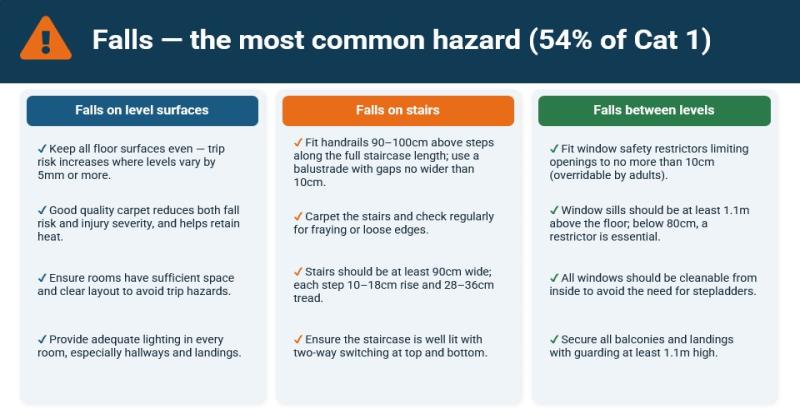
Falls are the most common hazard, representing more than half (54%) of hazards in rental properties. There are a number of simple changes you can make to make your homes safer, from ensuring stairwells are well lit, that there are handrails and that carpet is good quality and free from fraying.
Excess cold and damp and mould
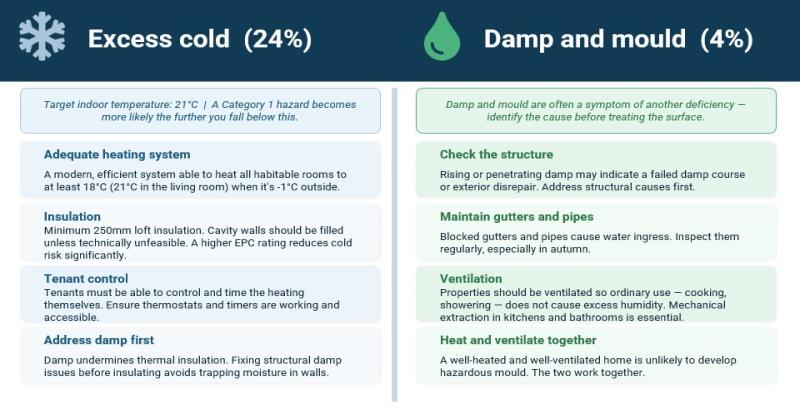
Excess cold is the second highest ranking hazard at 24%. Both excess cold and heat are considered hazards there is no maximum temperature for your rental – only a minimum, of 18 degrees in all rooms and 21 degrees in the living areas, when it is below zero outside. It is also important tenants can access and change the thermostat themselves. Damp and mould, responsible for 4% of category one hazards, can be related to low temperatures and you will need to check the root cause of any issues you identify. This could be structural, or due to an issue with ventilation.
Fire
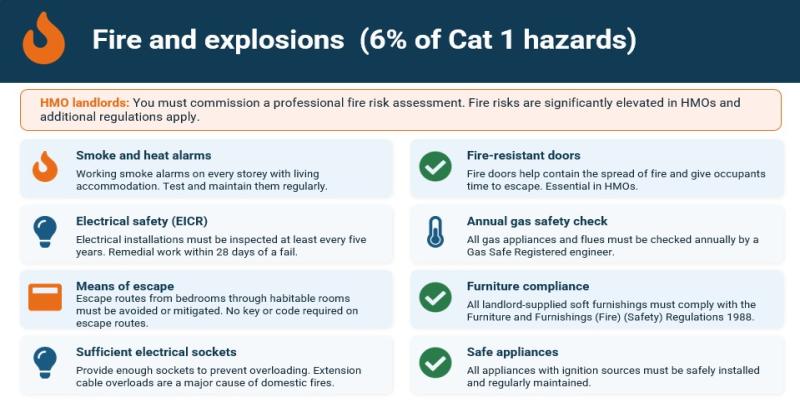
Responsible for 6% of category one hazards, fire safety checks stretch from the installation of smoke alarms, to ensuring there are appropriate escape routes. Remember, if you are a HMO landlords You must commission a professional fire risk assessment. Fire risks are significantly elevated in HMOs and additional rules apply.
How often should I be inspecting my homes? And what do I do?
The NRLA checklist is a good place to start. As well as explaining what you need to check – which includes the property itself, both inside and out as well as any gardens, outbuildings and paths – it also tells you what to look out for, including any relevant measurements. For example, if your property has a shower, the step into the tray must not be more than 150mm. This level of detail will help you to ensure you meet the precise measurements outlined in the standard.
Could a property inspector turn up unannounced?
Theoretically yes, but in practice an inspection is likely to be triggered by something, be that a tenant complaint, a routine checks on a licensed property, referrals from another agency, or a proactive investigation by the council.
In most circumstances you will get at least 24 hours’ notice of the visit, although this is not necessary if the local authority believes a licensing or HMO management offence might be being committed.
What are the penalties for getting it wrong?
These can be severe – and costly. A criminal prosecution comes with the threat of an unlimited fine at magistrates' court plus court costs and victim surcharge. If there is a civil financial penalty imposed you can be fined £7,000 per category one hazard, or up to £40,000 for failure to comply with an improvement notice. In very serious cases you could be hit with a banning order, preventing you from managing your property for a minimum of a year. If you are hit by two or more financial penalties in the year you will be added to the rogue landlord database. The tribunal can also issue a rent repayment of up to 12 months' rent to the tenant or council.
More information
To access and download our free landlord checklist visit our HSSRS guidance here and scroll down to the bottom of the page.
You can read more about HHSRS and your responsibilities in our members’ guide here.
The NRLA also runs a property standards and safety course outlining your obligations, which has been updated to include the new rules. To find out more and to book your place click here.
You can also find out more about the new HHSRS rules in the latest episode of our podcast Listen Up Landlords (below). The section on HHSRS starts at 28:13.